Against my expectations, the major stock indices in the US broke out on the upside and made new highs over the last ten days. However, from a technical point of view the new highs are not particularly impressive. While market breath improved the number of stocks that trade above their 200-day moving average is disappointing.
Furthermore, if we look at the number of stocks that reach 12-month highs, the number is extremely low.
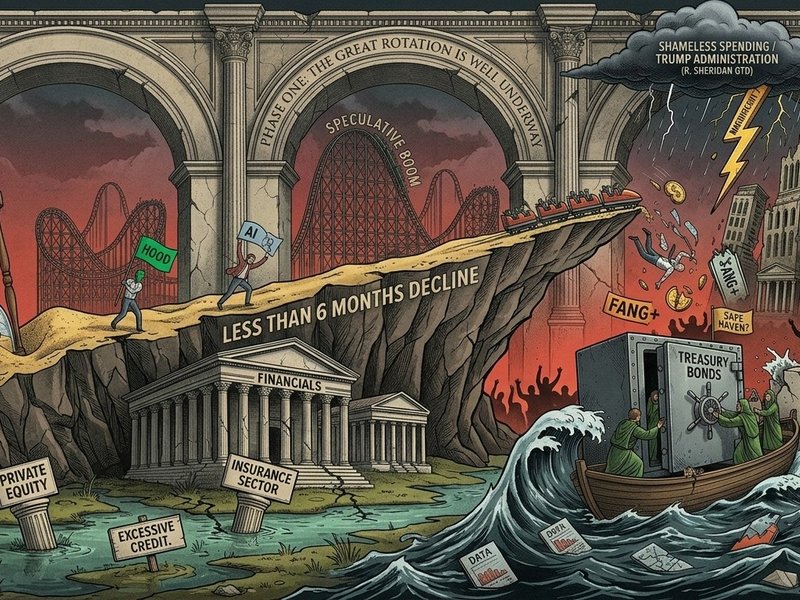
Of interest is that since the summer of 2024 (almost two years ago), the US stock market’s advance has been narrowing with fewer and fewer stocks reaching new highs. Noteworthy is also, that following the recent (March 2026), sell-off, the stock market did not become nearly as oversold as in October 2022 and as a year ago in April 2025.
I am bringing up these technical details about the US stock market because I want to make sure that my readers understand that we are not dealing at present with a new bull market that would last for several years but with an aging bull market that began from a deeply oversold condition in March 2009 and which experienced several correction phases like in recent times in 2020 and 2022.
But what is important to note is that at the recent low at the end of March, the US stock market was nowhere near as oversold as at the intermediate market lows in March 2020 and in October 2022.
In a recent missive, Charlie Bilello makes an important point: “The majority of US stocks (59%) underperformed Treasury bills over their lifetime and 45% ended with a negative cumulative return.” According to Professor Hendrik Bessembinder at the W. P. Carey School of Business in Arizona who evaluated lifetime returns of every U.S. common stock traded on the New York and American stock exchanges and the Nasdaq since 1926, most equities underperform Treasury bill returns. According to him, “The results also help to explain why active strategies, which tend to be poorly diversified, most often underperform.” Bessembinder also found that “the largest returns come from very few stocks overall - just 86 stocks have accounted for $16 trillion in wealth creation, half of the stock market total, over the past 90 years. All of the wealth creation can be attributed to the thousand top-performing stocks, while the remaining 96 percent of stocks collectively matched one-month T-bills.”
Now, I wish my readers to reflect upon the following. Above, we saw that the technical position of the US stock market is far from perfect. Furthermore, we just learned that contrary to popular belief 59% of US stocks underperformed Treasury Bills over their lifetime. In other words, by investing in T-bills (cash), the opportunity cost is not particularly high or non-existent.
Let us also consider the following. Usually, but obviously not always, the US stock market does not perform particularly well during midterm election years. To put it bluntly, the end of April/early May period is statistically not the best time to buy US equities in both midterm-election and non-election years.
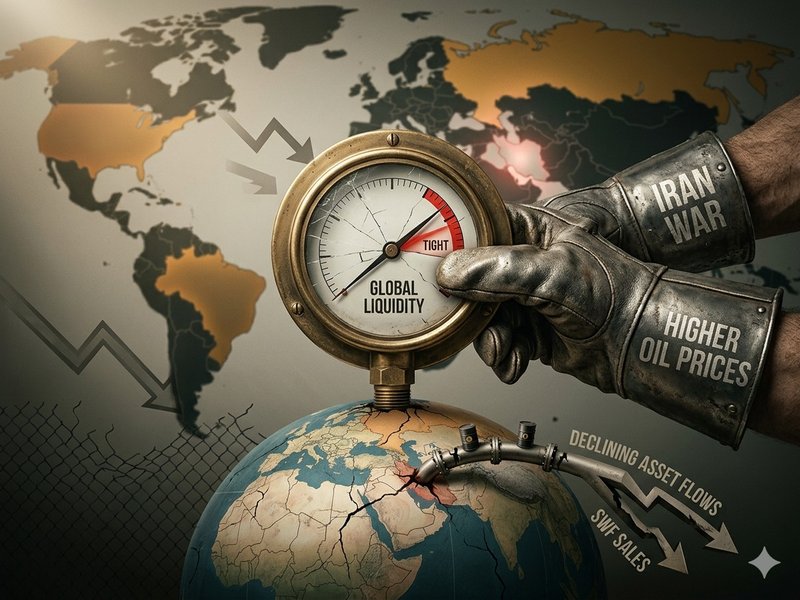
When I consider all the factors that I discussed above, and the Iran War, which without question will put upward pressure on prices and interest rates I feel reasonable happy increasing temporary my cash and bond allocation, especially in view of the fact that US investors currently hold an all-time low allocation to cash.
The war around Iran is a sad tale about which my friend Fernando del Pino Calvo Sotelo has written an outstanding essay entitled “The Iranian Trap: Anatomy of a Blunder.” I am reproducing his essay in my report because it is a masterpiece that combines literature, history, geography, geopolitics, philosophy, psychology, and economics.
Lastly, my readers should remember the words of George Orwell who thought that, “Every war when it comes, or before it comes, is represented not as a war but as an act of self-defense against a homicidal maniac” and of Karl Kraus who opined that, “War is, at first, the hope that one will be better off; next, the expectation that the other fellow will be worse off; then, the satisfaction that he isn’t any better off; and, finally, the surprise at everyone’s being worse off.”
With kind regards
Yours sincerely
Marc Faber
Ready to get started?