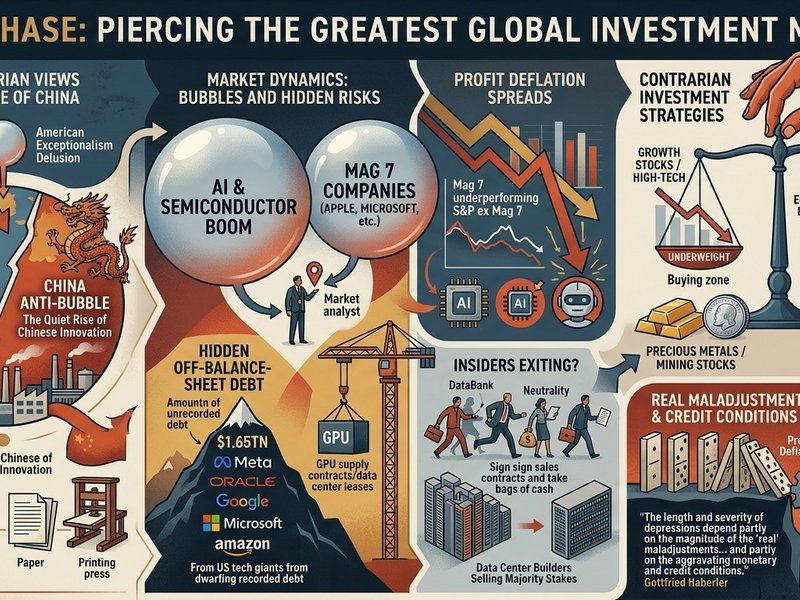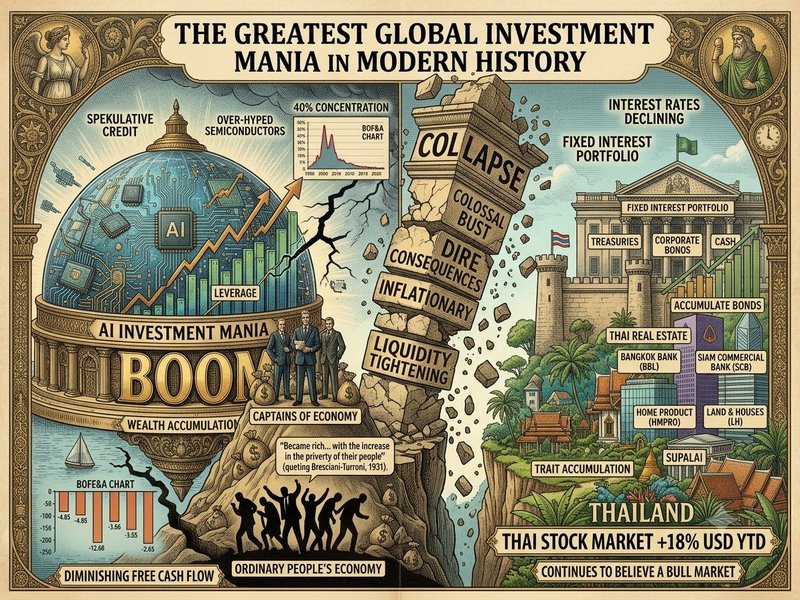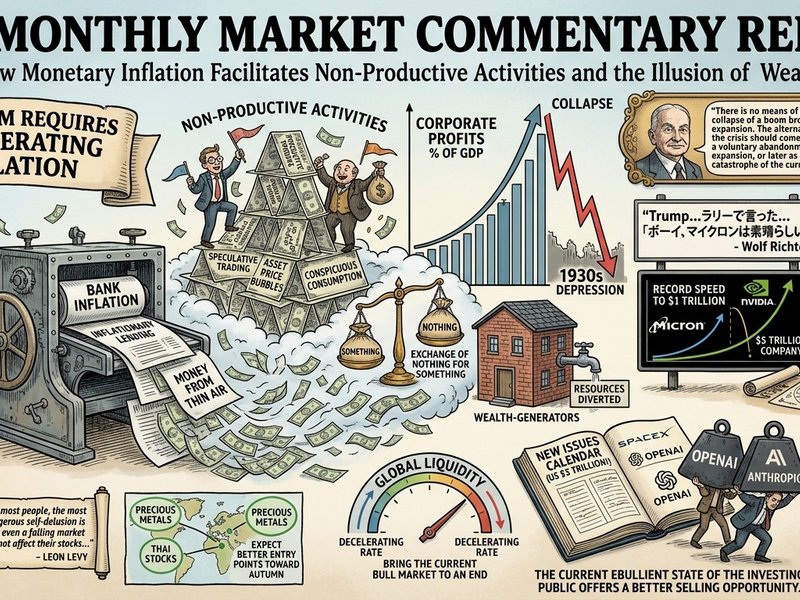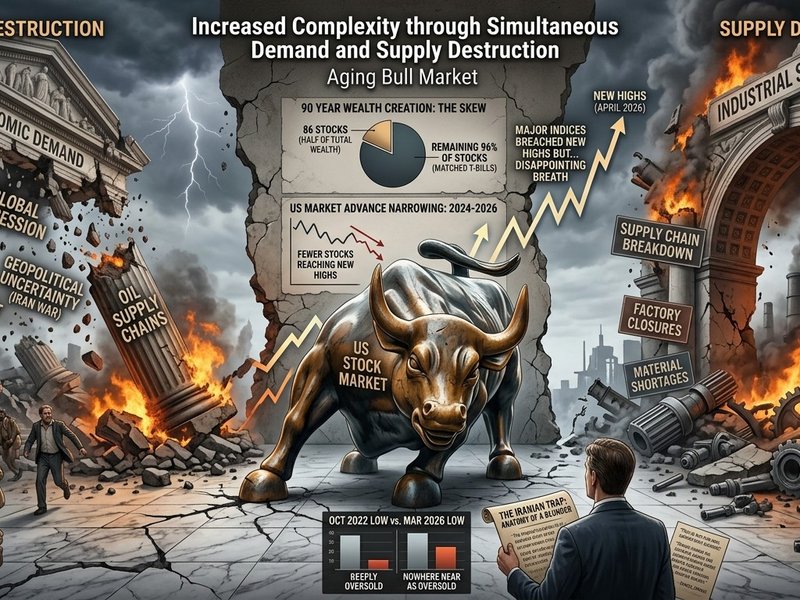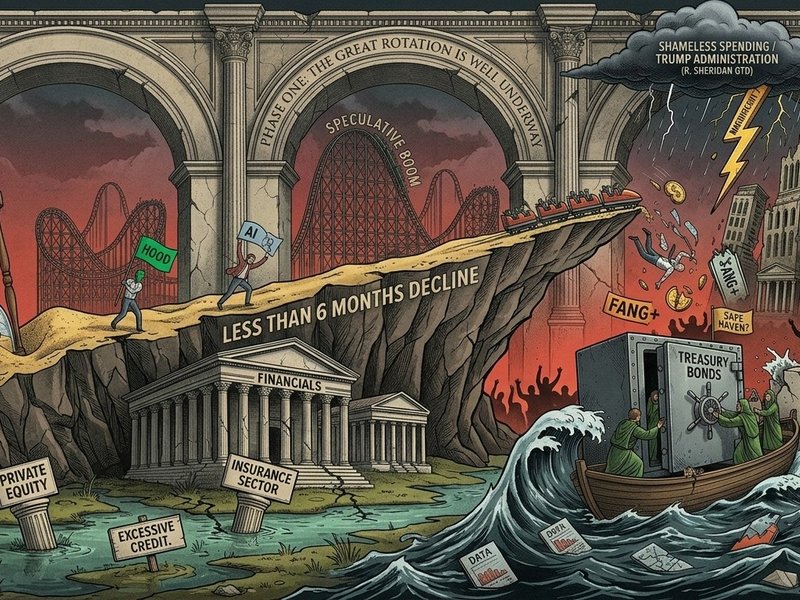
Last month, I also postulated that I could not be enthusiastically bullish about government bonds because compared to consumer price inflation, their yield was not particularly high. However, I noted that as a believer that we would shortly experience massive asset price deflation in just about everything (such as we just saw in cryptocurrencies, and in commercial properties in recent years), I considered Treasuries to be relatively attractive.
As an example, I compared the performance of Treasuries to the Magnificent 7 stocks and found that Treasuries had significantly outperformed these most popular stocks since the beginning of the year.
I had mentioned before that, the worst scenario for the economy would be if asset prices declined while at the same time consumer good and consumer service prices would increase. In this scenario, consumers would get squeezed on both sides. The inflated household wealth would shrink and inflation-adjusted incomes (real incomes) would diminish badly. This combination would be relatively positive for US Treasuries because the economy would slump.
It is obvious that the Iran War with the closure of the Strait of Hormuz has significantly reduced the cash flows of the oil producers in the region (UAE, Qatar, Kuwait, Saudi Arabia and Iran) and, therefore, some sovereign wealth funds are selling assets. But this is not the only cause of tightening liquidity. In earlier reports I had explained how unaffordability had a negative impact on the housing industry and how declining real estate prices had tightened the liquidity of households. Similarly, the decline in the value of crypto currencies has tightened the liquidity for Generation Z, which is the most enthusiastic player in the crypto markets.
It is probable that the rise in oil prices will make everything more expensive and tighten liquidity around the world with few exceptions. The increase in oil prices should be beneficial for energy producers that are located outside the Middle East (especially in Russia, Africa, Latin America and the US). In the February report, I mentioned that I was increasing my exposure to the energy sector and adding to positions in BP P.L.C. (BP/ LN), Repsol (REP SM), CNOOC (883 HK), Sinopec (2386 HK), Meren Energy (MER CN), and TotalEnergies SE (TTE FP), Eni SpA (ENI IM), Petroleo Brasileiro (PBR), Ecopetrol (EC). I continue to hold these stocks but I recognize that they are no longer at excellent buying points.
My regular readers know that I also own bonds in my diversified portfolio of assets. While interest rates are likely to move somewhat higher in the near term, I believe that the economic weakness in the US will take down rates following the ongoing spike. Jesse Felder for whom I have the highest respect noted a few weeks ago that, “the 10-year treasury yield was potentially headed for a breakout from its long-term pennant pattern. That breakout occurred last week. Classical technical analysis suggests that the follow through could now be commensurate with the flag pole that immediately preceded the formation of the pennant itself. If that turns out to be the case, then we could see this yield cross above the 6% level at some point over the next year or so.”
Whereas I largely agree with Felder that interest rates may continue their upward trend, I prefer holding Treasury bonds over the Magnificent Seven stocks, semiconductors and other AI related companies, which in my opinion continue to have significant downside risk for a variety of reasons. As an aside, the TLT ETF (long term Treasury ETF) is down year-to-date by 1.6% whereas the S&P 500 Index is down 7%, and the NASDAQ is down 9.9%.
“If stocks were to decline further wouldn’t the Fed and other central banks flush the system with liquidity to push asset prices higher?” some readers might ask.“Perhaps,” I should think, but it might not help asset markets because, as was the case since September 2024, fed fund rate cuts could be accompanied by rising bond yields.
Lastly, in view of the fact that so many “experts” keep on maintaining that the current Iran War was “necessary” or “preventive”, I would like to remind my readers of the words of Otto von Bismarck who exclaimed that, “Anyone who has ever looked into the glazed eyes of a soldier dying on the battlefield will think hard before starting a war,” and thought that, "Preventive war is like committing suicide out of fear of death."
About precious metals, which I still like under the current war conditions, my friend Jan Baltensweiler of VON GREYERZ AG makes the point below that investors remain grossly underweight precious metals.
I am also enclosing a report by Bruce Talley and Doug Clayton about opportunities in Ukraine real estate. In Ukraine Apartments: Frontrunning the Postwar Repricing, Bruce Talley, managing director of Ukraine Capital (bt@ukraine-capital.com), explains the available opportunities. Interested readers can contact Bruce directly or: info@ukraine-capital.com
With kind regards
Yours sincerely
Marc Faber
Ready to get started?