A particular economist whose essays I read frequently is Daniel Lacalle (www.dlacalle.com), who occasionally also writes for the Mises Institute (www.mises.org). In an essay published on August 15, 2026, he explains whyAmericans are falling into the socialist trap by blaming capitalism for the damages of statism.
Lacalle writes: “Americans are falling into the socialism trap by not realizing that solving big government problems with an even bigger one is dangerous. Many blame capitalism for their affordability problems, when the true cause is statism. Statism is the gradual replacement of civil society, markets, savings, and individual choice by political control, public spending, regulation, taxation, and monetary intervention.
Socialism markets itself well because scholars and politicians always judge socialist policies on their headline intentions, not on its disastrous results.
In most developed economies, and increasingly in the United States since 2008, the dominant force is not free-market capitalism but a model of big government, chronic deficit spending, high debt, rising taxes, monetary debasement, regulatory obstruction, and political interventionism that protects insiders while penalizing new entrants. That is why so many millionaires and wealthy people support socialism. It is the perfect way to eliminate a merit-based system, obliterate competition, and keep privileges provided by political affiliation while demanding even more government control. Few people are richer and more powerful than socialist tyrants and their enablers. Meanwhile, socialism needs poor people that stay poor and remain submissive to the state.
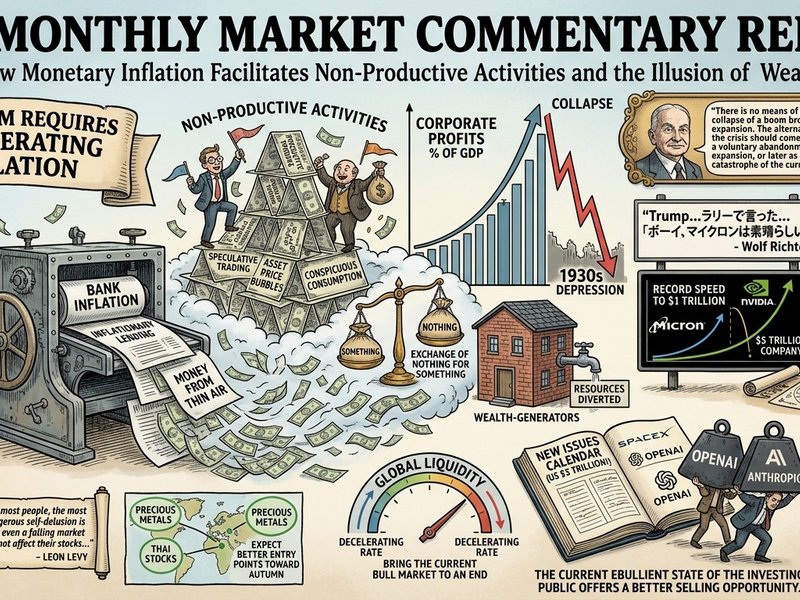
Socialism replaces success-driven inequality with a politically directed one. However, in statism inequality is a matter of price, not availability. Socialism leads to hyperinflation and scarcity because it ignores economic calculation and uses the debasement of currency to expropriate the wealth created by the remains of the private sector and keep citizens dependent and submissive, while the political leaders enjoy the perks of privilege. When the state spends too much and the central bank disguises the consequences, citizens are told they are being protected. However, they are being impoverished through currency dilution and asset inflation.
Artificial money creation is never neutral. It disproportionately benefits governments and owners of assets that can protect themselves from monetary inflation. At the same time, it always hurts real wages, deposit savings, and those with no assets Socialism is often sold as a rebellion against privilege, but in practice it is one of the most effective tools ever designed to entrench it. The bigger the state, the more valuable political access becomes. The more interventionist the system, the easier it is for large incumbents, bureaucracies, and connected interests to dictate regulation, capture subsidies, suppress competition, and decide who receives favors.
That is why socialism is so attractive to elites. It allows them to speak in the language of compassion and humanity while building structures of dependency.It provides them moral cover for higher spending, higher taxes, more control, and more bureaucracy, even as those policies reduce productivity, punish work and investment, and trap millions in stagnation.”
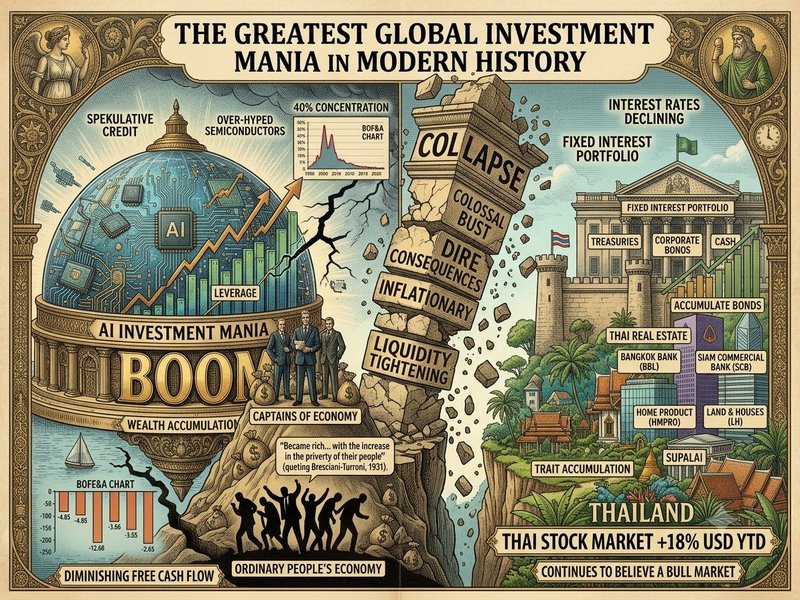
The economist Constantino Bresciani-Turroniobserved about the hyperinflation years in Germany in 1918 – 1923: “The new captains of the German economy derived their power from the destructive forces of their time and became rich not with the increase in general prosperity, but with the increase in the poverty of their people.”
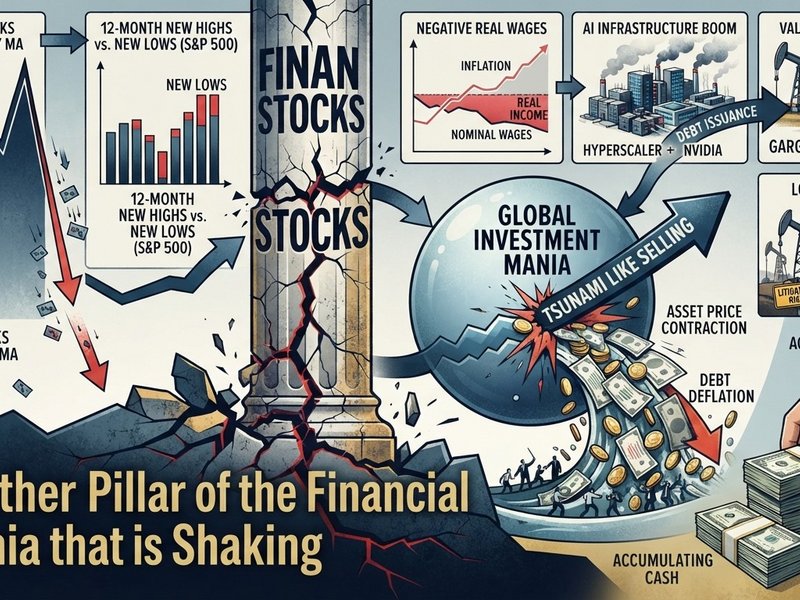
Brij Khurana, a fixed-income portfolio manager at Wellington Management writes in the Financial Times: “Perhaps there is no better example of the K-shaped nature of the US economy than the fact that employee compensation has fallen to 50 per cent of GDP, its lowest level since 1947, while household net worth is close to an all-time high of 546 per cent relative to GDP. This dichotomy helps explain the resurgence of socialism among younger Americans. Gen Z depends disproportionately on wages, whose purchasing power has been eroded by inflation, while baby boomers hold much of the country’s accumulated wealth. It is this wealth effect that is increasingly responsible for the inflation that remains in the US economy. Excluding shelter, core inflation has been relatively stable at about 2 per cent for the past three years. The stickiest components of inflation are related to housing, restaurants, travel and other services where demand is tied to wealth.
If Federal Reserve chair Kevin Warsh is committed to bringing inflation to target, he will need to slow the growth in asset prices.”
Correct, “if Federal Reserve chair Kevin Warsh is committed to bringing inflation to target, he will need to slow the growth in asset prices”. “The Fed will need to address asset prices head-on in creative ways if it is going to return inflation to target” by tightening monetary policies meaningfully. Equity markets around the world will not like it.
I am enclosing with this report my friend Jan Baltensweiler’s essay about gold entitled,
Don’t Worry About Missing China’s Higher Gold Prices.
Worry About the Western Paper Gold Market.
Everything considered, I still believe that precious metals are the most attractive asset class in relative terms.
With kind regards
Yours sincerely
Marc Faber
Ready to get started?