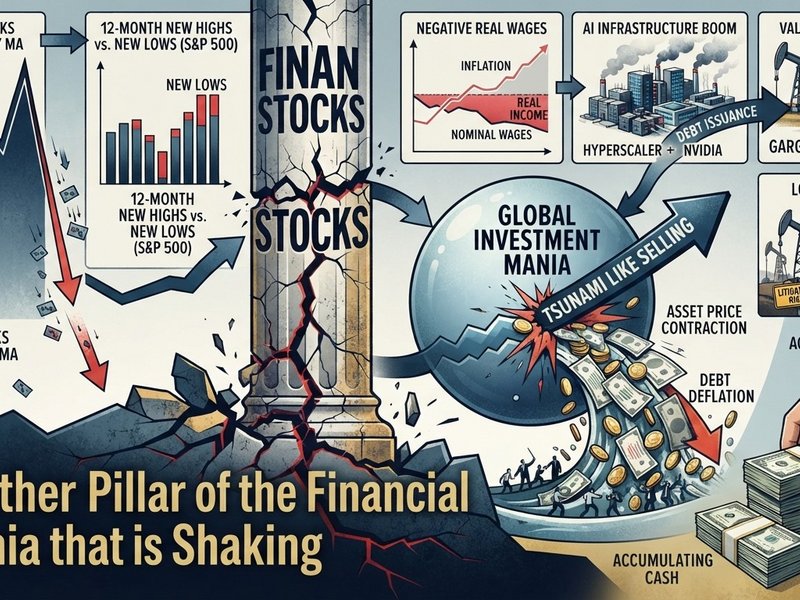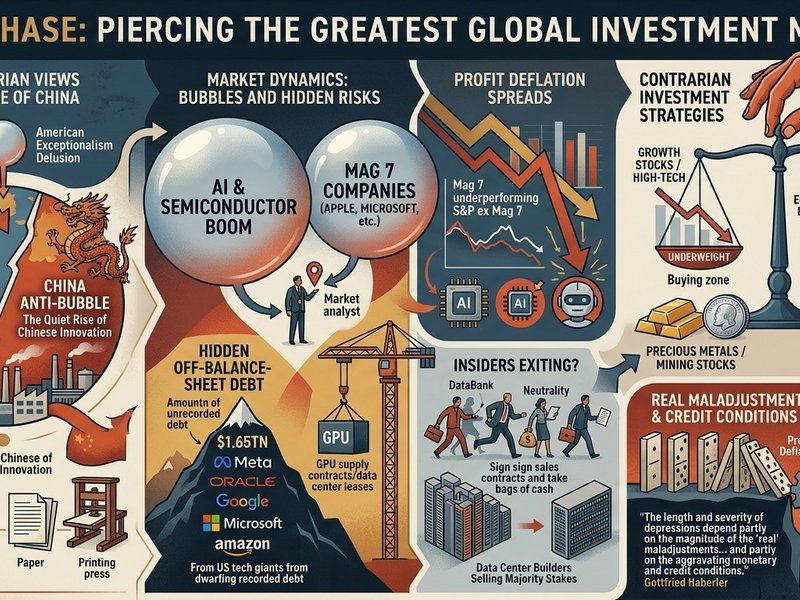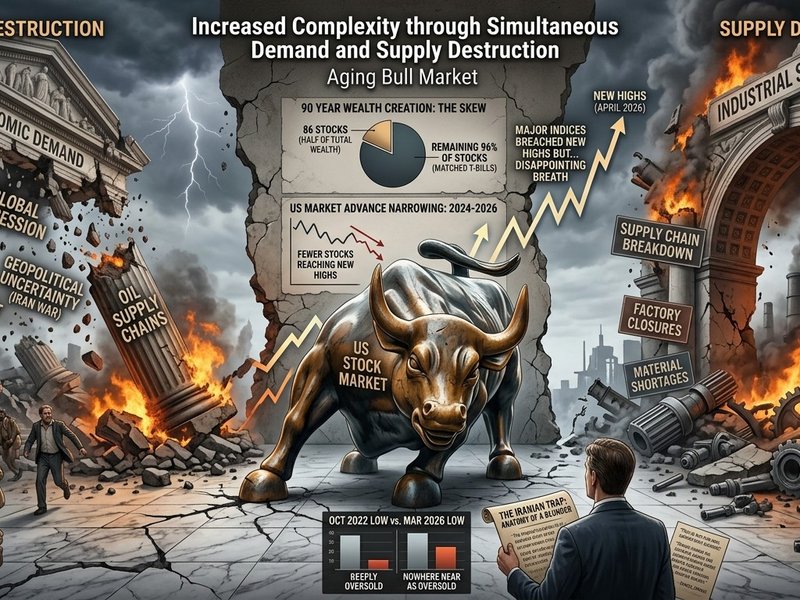
BofA just published a chart about the concentration of companies in historic investment manias beginning with the railroad mania of the late 19th century. Usually, when the bubble theme reaches a heavy concentration (around 40% of the stock market capitalization) a collapse follows.
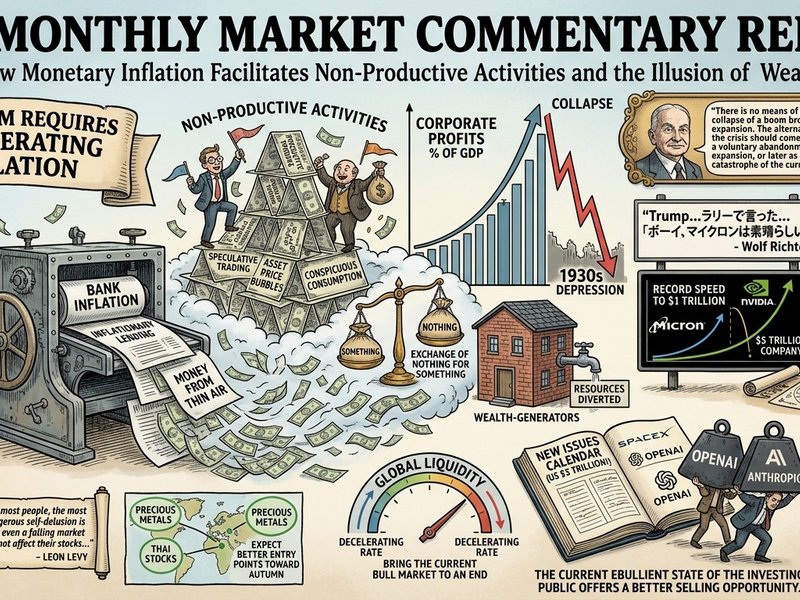
As I have argued in the past, the rules of the game are changing and with them, the investment environment. In particular, what also caught my attention is that the free cash flow of major AI participating companies is diminishing and will likely turn negative in future, which will be a headwind for these companies’ stock performance and therefore, also for the entire stock market.
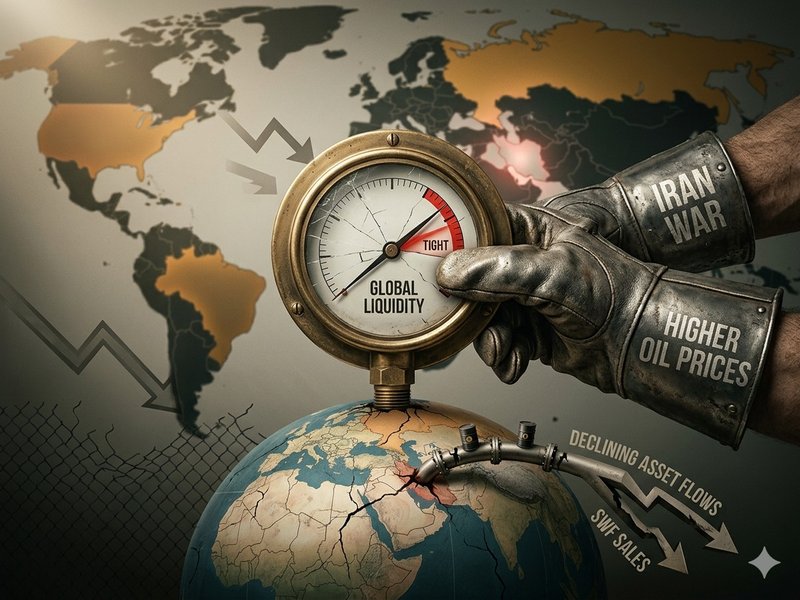
I am not sure as to what the impact of the increase in AI-related capital spending will be on the economy because as we have just heard, Oracle ended its fiscal year with 141,000 full-time employees, down from 162,000 a year earlier. However, it would seem to me that the global AI-related capital spending boom will cause a relative tightening of liquidity conditions, which will be negative for grossly inflated assets including US equities.
Another feature of the AI-related capital spending boom may be that it will be inflationary in its initial phase and keep interest rates relatively high. So, on balance its impact on the economy of ordinary people may not be all that positive, which the performance of the stock market seems to be confirming.
My friend Kevin Duffy (duffy@bearingasset.com), whom I have known for almost 30 years, recently wrote an essay about the US high tech sector. His essay analyses numerous aspects of the current AI investment bubble and I strongly recommend my readers to study Kevin’s observations because as Zerohedge recently opined, “75% Of US GDP Growth In The First Quarter Was Due To AI. AI is now not only a market bubble, but it has become a core anchor propping up the entire US economy; it's also why the US government will have no choice but to backstop it once the inevitable AI bubble pops.”
We have seen that if the AI-related displacement “is sufficiently large and pervasive, it will alter the economic outlook by changing profit opportunities in at least one important sector of the economy.” Needless to say, the boom in the AI sector will one day give way to a colossal bust, which will have dire consequences on all AI-related stocks and collapse the prices of the companies whose earnings were grossly inflated during the AI-related capital spending boom.
My first recommendation, therefore, is to avoid the currently most popular sectors of the equity markets which include technology, social media and semiconductors.
I further believe that the AI-related boom sectors including the over-hyped semiconductors are vulnerable because of the leverage speculators have been using. Major bubbles always involve an increase in speculative credit. But as Carmen Reinhardt pointed out, “If there is one common theme to the vast range of the world’s financial crises, it is that excessive debt accumulation, whether by the government, banks, corporations, or consumers, often poses greater systemic risks than it seems during a boom.”
In recent reports, I have repeatedly discussed the merits of owning a fixed interest portfolio consisting of cash, Treasuries, corporate bonds, etc. of different qualities and maturities. Lately, the market action of US Treasuries has been encouraging because more and more indicators confirm that the US economy is weak outside of the AI sector. Therefore, I continue to accumulate bonds in the belief that interest rates will decline somewhat over the next six months or so.
More recently, with the improvement in the bond market, I also observed an improvement in interest rate sensitive stocks around the world including financials, home builders, real estate developers, utilities and REITs. I am still holding a large portfolio of Hong Kong and Singapore property stocks and REITs, and I am accumulating Thai property and related stocks such as Land & Houses (LH TB), Supalai (SPALI TB), Home Product (HMPRO TB), etc.
As I repeatedly explained over the last year, I have also a large exposure to Thai banks including Bangkok Bank (BBL TB), Siam Commercial Bank (SCB TB), Kasikorn Bank, Krung Thai Bank, etc. Even failed states can enter bull markets once foreign fund managers have liquidated their positions. The Thai stock market is up year-to-date 18% in US dollar terms. I continue to believe that a bull market is underway, which could lift stocks by another 50% over the next two years
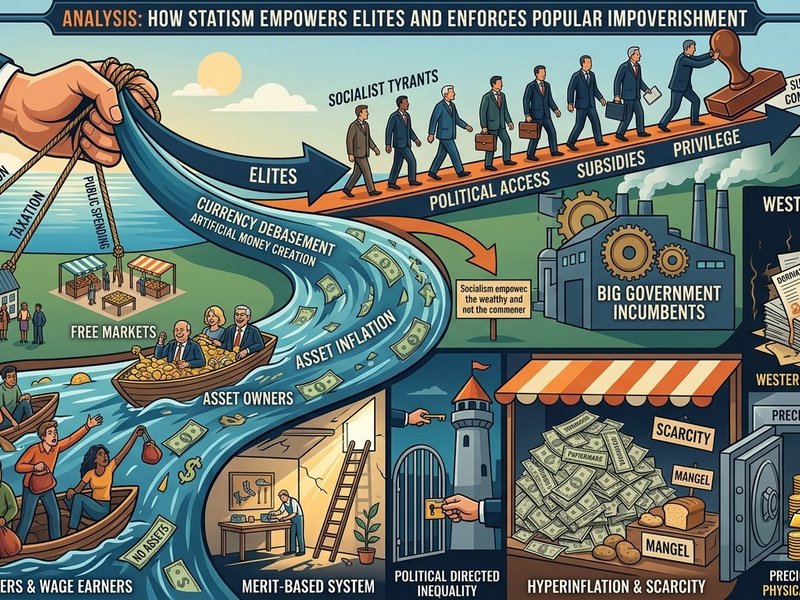
Reflecting about the wealth accumulation during the Weimar inflation 1918 – 1924, Professor Constantino Bresciani-Turroni, wrote inThe Economics of Inflation, 1931, that, “The new captains of the German economy derived their power from the destructive forces of their time and became rich not with the increase in general prosperity, but with the increase in the poverty of their people.”
Something my readers should ponder about.
With kind regards
Yours sincerely
Marc Faber
Ready to get started?