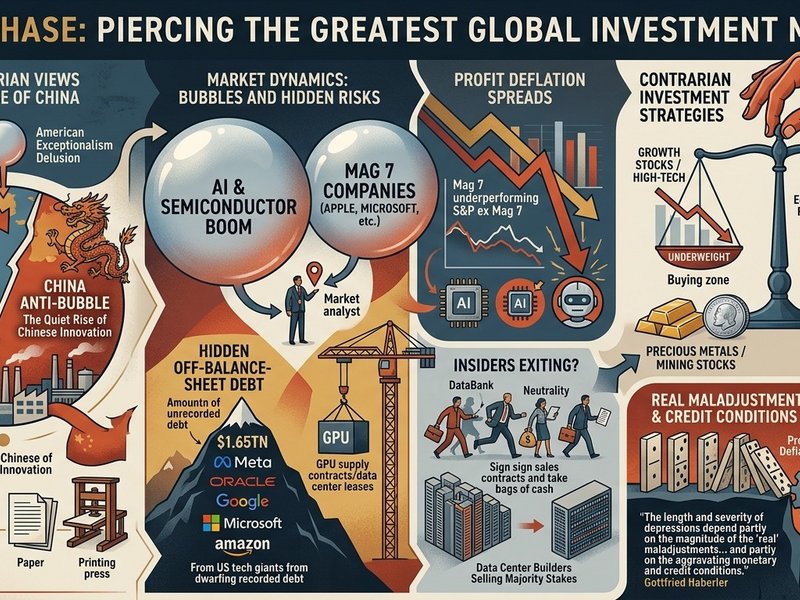
According to Yahoo Finance, the research provider Gartner predicts that by 2030, “80% of Neoclouds” will be out of business. Its analyst, Will Sommer, said spending growth on AI-optimized infrastructure "will be too low for most AI compute providers to recover their AI investments."
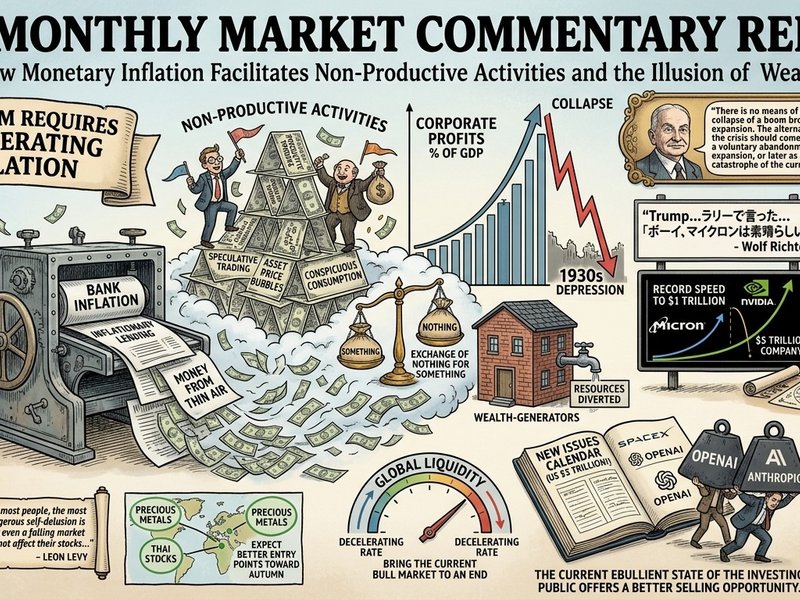
According to American management consulting company Bain & Co., “The AI industry will need to generate as much as $6 trillion in revenue by 2031 to sustain its ongoing global infrastructure build-out. AI products across the consumer and enterprise markets are projected to generate between $1.2 trillion and $1.8 trillion by then, leaving the industry with a potential shortfall of $4.2 trillion.”
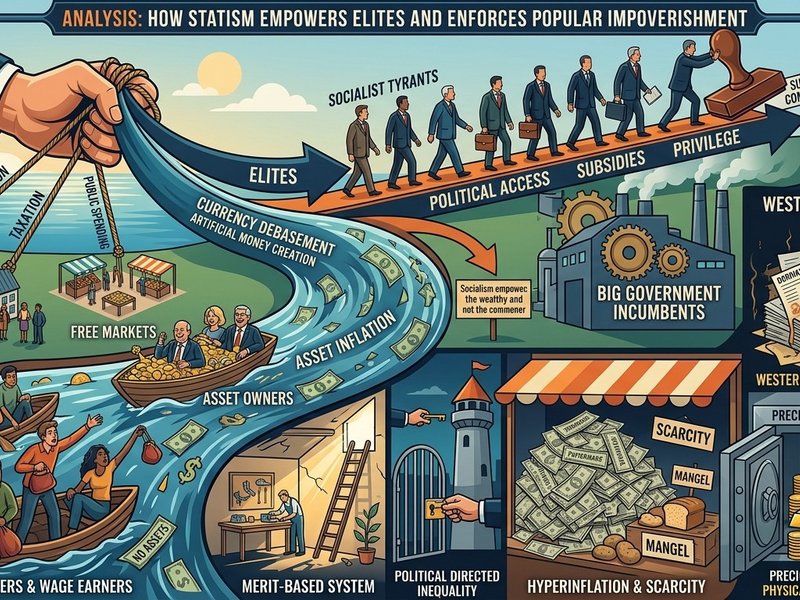
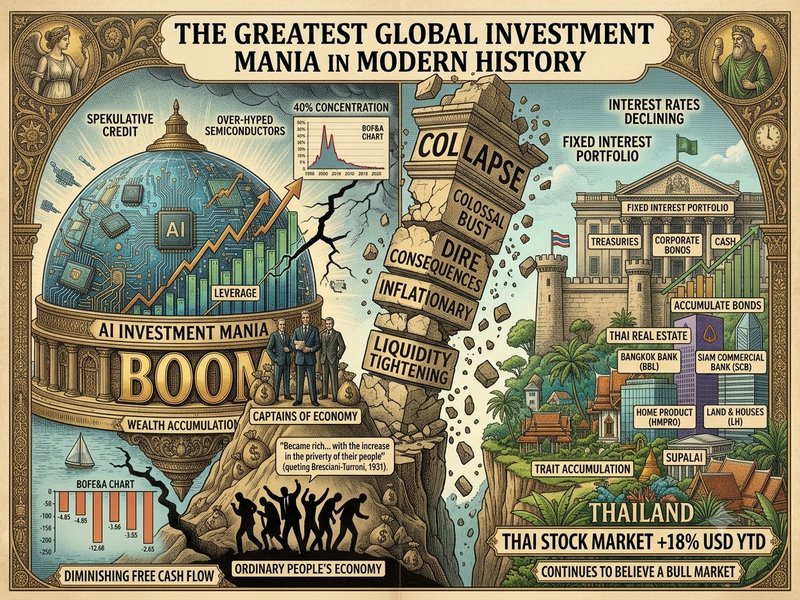
Charlie Bilello notes that we are dealing with “Two Very Different Economies. In one economy, the AI infrastructure boom continues at a breathtaking pace, with spending on data center construction soaring to record highs. In the other, construction spending across the rest of the private sector is actually declining.” Bilello further adds that, “The wealthiest 0.1% of Americans now own a record 15% of all household wealth. The bottom 50% Just 2%.”
It is not necessarily a sign of a booming economy (according to the buffoon, “the best ever”) if homes sales are at about the same level as 30 years ago given that the US population grew from 269 million in 1996 to currently 350 million.
Furthermore, it is not indicative of a healthy economic society when in a city like New York so many restaurants are closing down. According to The Kobeissi Letter, “The number of restaurants in New York dropped ~2,000 YoY in Q1 2026, posting its largest YoY decline in at least 36 years. This surpasses even the worst contraction recorded in any quarter during the 2020 pandemic.”
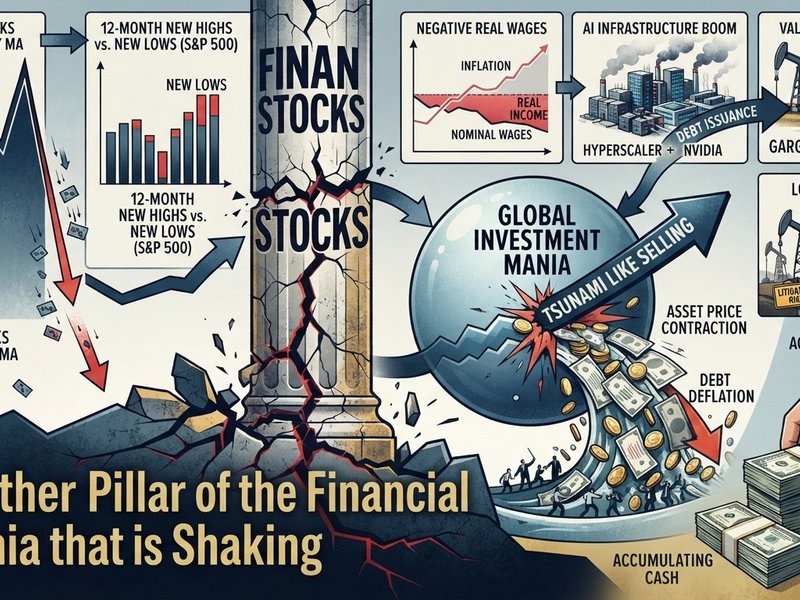
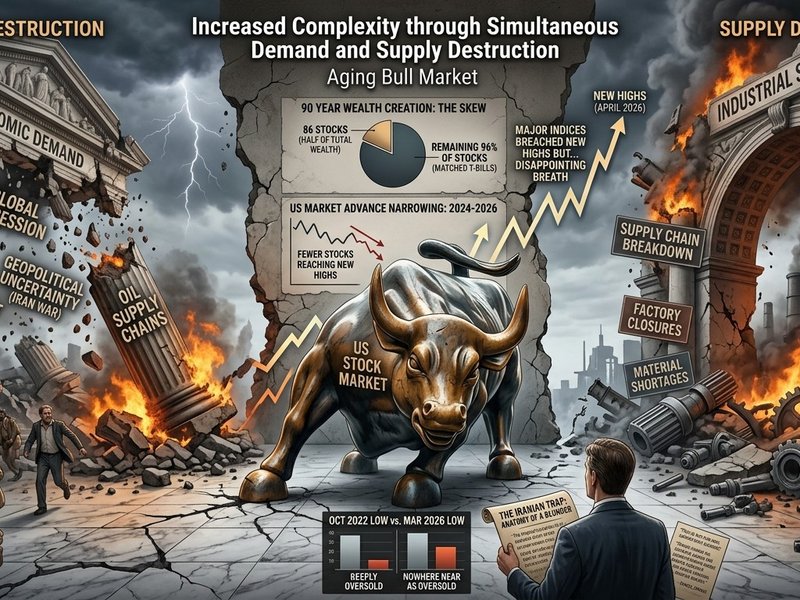
Over the last few months, I have argued that the US stock market was in the process of completing a topping out formation, which had already begun in 2021 when the theme stocks and the majority of US stocks topped out. I went back to some old charts to prove my point. After 2021/2022, major US stock indices have continued to move up but as I showed in recent reports, with a diminishing number of stocks driving the advance. Moreover, the US stock market has increased from “highly valued” to “ridiculously valued.”
While a further rise in stocks is a possibility since it seems that money printing and fiscal deficits are most likely to continue, all market indicators including record valuations, excessive leverage, and the investment community’s widespread optimism, would indicate that we are close to a generational high in most stocks.
Furthermore, the excessive levels of debts on all level of society would suggest that volatility will increase significantly in currencies, commodities, stocks, and bonds – in short in all asset classes. And as I write these last few lines (October 30), Alphabet (GOOG) – a company with a $3.5 trillion market cap that has a larger capitalization than most stock markets in the world collapsed by 13% the previous day. From the May 2026 high it is now down by 30%. But not to worry: in the long-run stocks always go up…..especially our buffoon’s company DJT. [When in August 2025 the Trump administration bought a stake in Intel, I thought that this would temporarily lift its stock but that thereafter INTC would likely head down and down as far as the eye could see.]
Last month, I explained that I was about to build a position in long-term Treasuries. Accordingly, I am gradually accumulating 10-year US Treasuries and the TLT ETF, albeit without great enthusiasm. But I feel that if I were to lose money on 10-year Treasuries, stock holders would likely lose even more money. Furthermore, assuming that US interest rates would now increase even further (and bond prices decline), it is probable that the US dollar would strengthen and put additional pressure on precious metals and related equities. Conversely, were US interest rates to decline, the US dollar would likely weaken but the appreciation of US Treasuries would mitigate the loss from the dollar decline somewhat.
In closing I wish to repeat what I said on numerous occasions in the past and which I adapted from some wise words of the late Leon Levy:
For most people, the most dangerous selfdelusion is that a falling stock market will not affect their other assets, which they bought out of a canny understanding of value.
I wish my readers a peaceful festive season,
With kind regards
Yours sincerely
Marc Faber
Ready to get started?